←
Back to Blog
Cybersecurity
•
•
Team PixelPilot
•
4 min read
Threat Modeling for Web Apps
Chart threats against your web app: list entry points, sketch attacker steps, and attach concrete, testable mitigations
Introduction
Web applications are an essential part of modern business. They support online services, customer portals, e-commerce platforms, and internal tools. As these applications grow in complexity, they also become attractive targets for cyber attacks. Threat modeling is a structured approach that helps organizations identify potential risks early and take steps to reduce them before real damage occurs.
What Is Threat Modeling?
Threat modeling is the process of thinking ahead about how a web application could be attacked and what could go wrong. Instead of waiting for security incidents to happen, teams proactively analyze their application to uncover weaknesses.
The goal is not to predict every possible attack, but to understand the most likely and most damaging threats. This allows teams to design stronger and more secure applications from the start.
Why Threat Modeling Is Important
Many security problems are expensive and difficult to fix once an application is live. Threat modeling helps identify issues during the design and development stages, when changes are easier and cheaper to make.
By addressing risks early, organizations reduce the chances of data breaches, service disruptions, and loss of customer trust. Threat modeling also supports compliance with security standards and regulations.
Understanding Web Application Assets
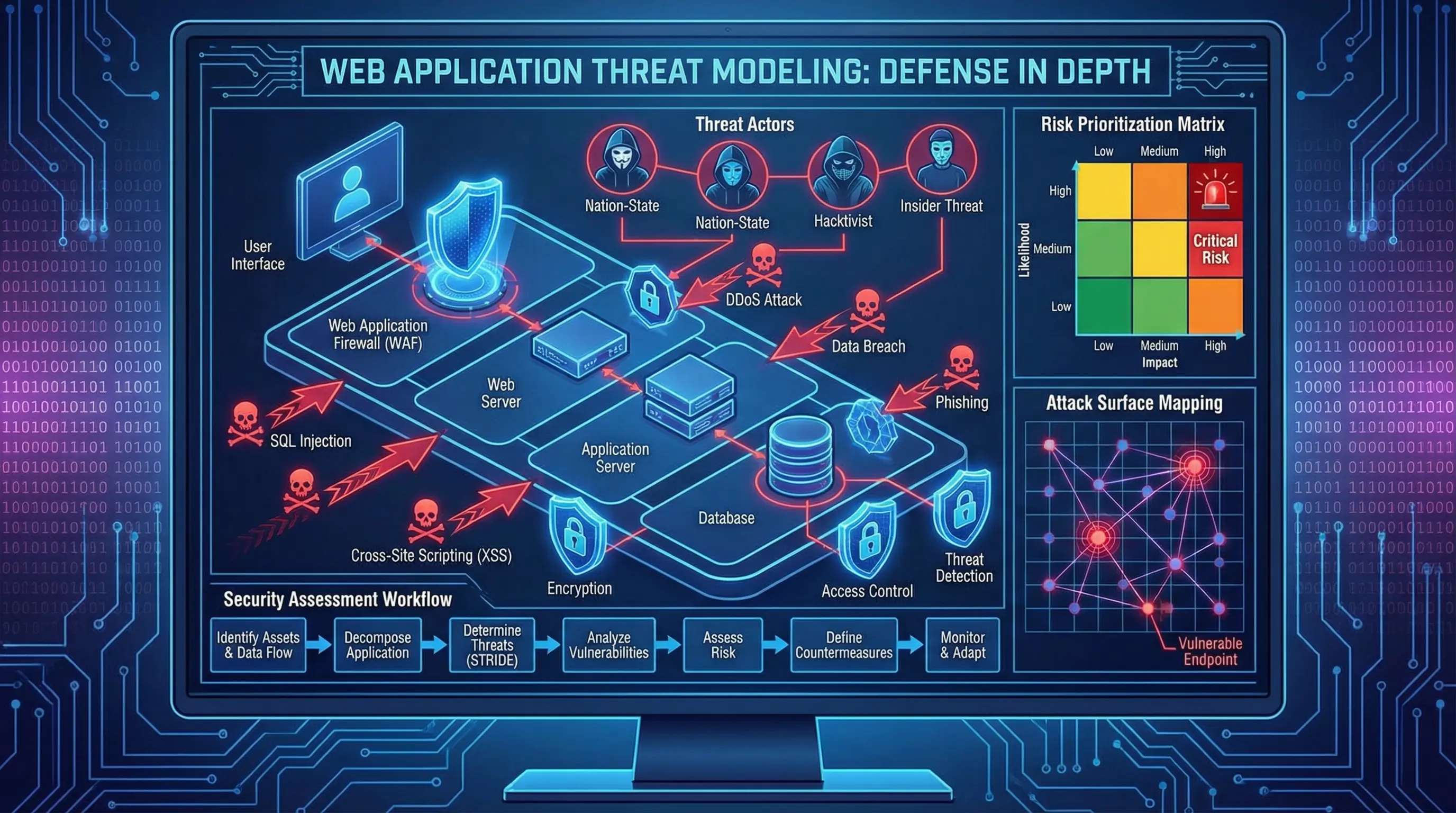
The first step in threat modeling is identifying what needs protection. These assets include user data, login credentials, payment information, and business-critical systems.
Understanding where this data is stored, how it moves through the application, and who can access it is essential. This creates a clear picture of what attackers may try to target.
Identifying Potential Threats
Once assets are identified, teams examine how attackers might compromise them. Threats can include unauthorized access, data leaks, system misuse, or service disruption.
Threat modeling encourages teams to think like attackers. This mindset helps uncover weaknesses such as weak authentication, exposed interfaces, or poor access controls.
Entry Points and Attack Surfaces
Web applications interact with users, systems, and external services through various entry points. These include login pages, APIs, file uploads, and forms.
Each entry point increases the potential attack surface. Threat modeling helps teams understand which areas are most exposed and require stronger protection.
Assessing Risk and Impact
Not all threats carry the same level of risk. Threat modeling evaluates how likely an attack is and how severe the impact would be if it succeeded.
This allows teams to prioritize security efforts. High-risk threats receive immediate attention, while lower-risk issues can be addressed later.
Designing Security Controls
After identifying and prioritizing threats, teams define security measures to reduce risk. These controls may include strong authentication, input validation, encryption, logging, and monitoring.
Threat modeling ensures that security controls are aligned with real risks rather than applied randomly. This results in more effective and efficient protection.
Collaboration Across Teams
Threat modeling is most effective when it involves multiple roles, including developers, security professionals, and business stakeholders. Each group brings a different perspective to the discussion.
This collaboration improves understanding, reduces blind spots, and creates shared responsibility for security.
Continuous Improvement
Web applications evolve over time as new features and integrations are added. Threat modeling is not a one-time activity. It should be repeated whenever significant changes occur.
Regular reviews ensure that new risks are identified and addressed as the application grows.
Business Benefits of Threat Modeling
Beyond security, threat modeling provides business value. It reduces downtime, lowers incident response costs, and protects brand reputation.
Organizations that practice threat modeling build more resilient systems and demonstrate a strong commitment to protecting users and data.
Conclusion
Threat modeling is a foundational practice for building secure web applications. By systematically identifying assets, threats, and risks, organizations can make informed decisions about security from the earliest stages of development.
In an environment of increasing cyber threats, threat modeling helps teams move from reactive defense to proactive protection, ensuring safer and more reliable web applications.
Need help with your digital project?
Our team builds websites, mobile apps, e-commerce platforms and runs data-driven marketing campaigns for businesses across the UK.